



The new law requires hemp products with more than 0.4 milligrams per container to be sold in licensed marijuana dispensaries. Opponents of the bill say they will go back to voters to repeal it

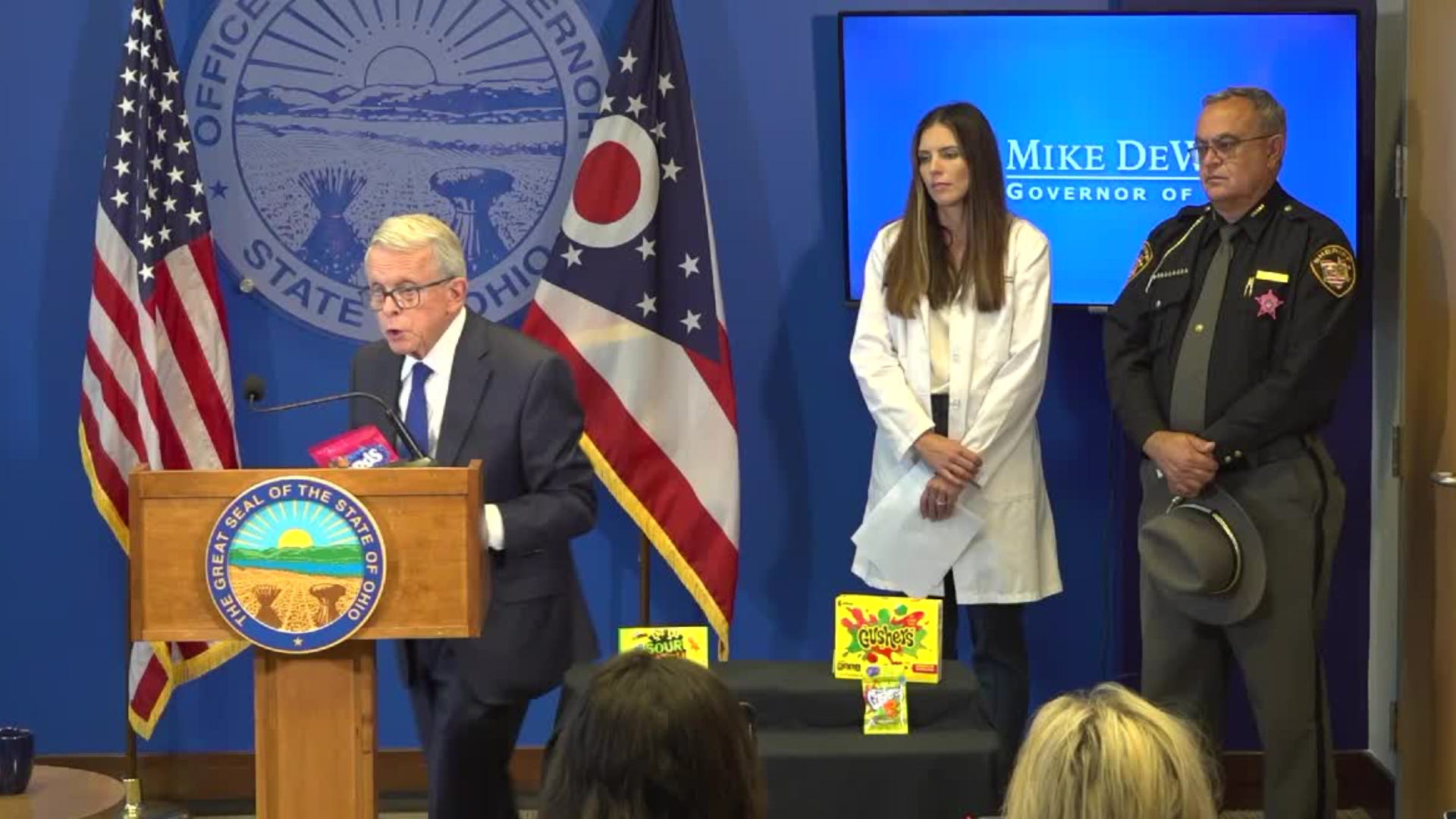


Gov. Mike DeWine reads THC-infused candy label
Ohio Gov. Mike DeWine reads a THC-infused candy label during announcement of 90-day ban on Oct. 8, 2025.
The sale of popular THC-infused drinks will be prohibited in Ohio after Gov. Mike DeWine uses his veto pen to strike out a provision that would’ve permitted sales.
DeWine said on Dec. 19 that he would strike the carve out for the beverages from Senate Bill 56, which includes sweeping restrictions on intoxicating hemp products and new penalties for marijuana users. Ohio voters legalized recreational cannabis in 2023.
“They cannot be sold,” DeWine said of the THC drinks. He said that retailers and manufacturers understood there was a good chance that they wouldn’t be allowed to continue making and selling THC drinks.
In October, rumor that DeWine would sign an executive order banning the THC-infused seltzers sent retailers and manufacturers scrambling to sell off inventory. A court order temporarily blocked DeWine’s order and lawmakers worked to craft Senate Bill 56.
Retailers and manufacturers will likely repeat the sell-off to clear their inventories before mid-March when the bill takes effect.
DeWine said that Ohio should have uniformity with federal law on hemp.
The new law requires hemp products with more than 0.4 milligrams per container to be sold in licensed marijuana dispensaries. The change mirrors a federal hemp ban that Congress passed in the bill to end the government shutdown.
The bill as passed had an exception for THC-infused beverages: Ohio would have allowed breweries and bars to sell drinks with no more than 5 milligrams of THC per serving until the end of 2026. DeWine vetoed that part of the bill.
Opponents of the bill say it goes against what Ohio voters approved when legalizing recreational marijuana.
Opponents of the bill say they will go back to voters to repeal it
“SB 56 forcefully defies the will of the voters of Ohio, who spoke clearly on this issue, and denies the people of Ohio the freedom to use these products for their personal use. We are launching a referendum campaign to go directly to the voters. We believe voters will say no to government overreach, no to closing 6,000 small businesses and pink-slipping thousands of workers across the state, and no to once again recriminalizing hemp and marijuana,” said Dennis Willard, spokesperson for Ohioans for Cannabis Choice.
Hemp products have gone largely unregulated since the 2018 Farm Bill. DeWine pleaded with lawmakers to restrict sales, especially to children who might mistake the packaging for candy. Frustrated, DeWine issued an executive order to ban intoxicating hemp, only to have a judge block it as unconstitutional.
But Senate Bill 56 does much more than restrict hemp sales. The bill also:
- Releases nearly $100 million in revenue for municipalities and townships with dispensaries.
- Allows restrictions on unemployment benefits, organ transplants, rental homes and parenting time based solely on marijuana use.
- Requires people who drive with marijuana products to store them in the trunk in their original packaging.
- Bans the smoking and vaping of marijuana anywhere except a private residence, which goes further than Ohio’s cigarette smoking ban.
- Prohibits smoking and home grow in transitional housing and homes used as childcare facilities.
Opponents say these changes go against the will of Ohio voters, who backed legalizing marijuana, 57%-43%, in 2023.
State government reporter Jessie Balmert can be reached at jbalmert@usatodayco.com or @jbalmert on X.
link